top of page
ESCÁNER 3D

ESCÁNER 3D

Escaneo 3D de alta precisión para proyectos innovadores

En GRUPO OMNIPRO 3D , ofrecemos soluciones avanzadas de escaneo 3D para una amplia gama de aplicaciones industriales, comerciales y creativas. Mediante equipos de última generación y software especializado, ayudamos a empresas y profesionales a digitalizar objetos y entornos con una precisión excepcional.

Nuestros servicios de escaneo 3D están diseñados para satisfacer las necesidades de diferentes industrias , proporcionando modelos digitales detallados que pueden utilizarse en diversas etapas de desarrollo, diseño y fabricación.

Ventajas del escaneo 3D

El escaneo 3D ofrece modelos digitales de alta precisión, ideales para una amplia gama de aplicaciones. Algunas de las principales ventajas de esta tecnología incluyen:

ESCANEO 3D
Explorar

Millimeter-Level Precision

Obtenga mediciones exactas de objetos y estructuras sin ningún contacto físico.

Time Savings

Procesos completos de digitalización y modelado con rapidez, eliminando la necesidad de mediciones manuales.

Reducción de costos

Evite costosos errores en el diseño y la fabricación del producto.

Flexibilidad

Los modelos 3D generados pueden utilizarse en diferentes etapas del ciclo de vida de un proyecto, desde el concepto inicial hasta la producción final.

Colaboración mejorada

Facilita la comunicación y la colaboración entre los equipos de diseño, ingeniería y fabricación mediante modelos digitales compartidos.

Sectores industriales a los que prestamos servicio

Nuestros servicios de escaneo 3D están disponibles en una amplia gama de industrias, donde la tecnología 3D puede optimizar procesos, mejorar la precisión y reducir costos. Algunos de los sectores clave a los que prestamos servicio incluyen:

Salidas de aire del coche

Automotive Industry

3D scanning for automotive parts inspection, prototype creation, and custom component design.

Optimization of manufacturing processes and quality control in vehicle production.

3D SCAN ARCHITECTURE.png

Architecture and Construction

Digitization of buildings and structural modeling for rehabilitation, renovation, and restoration projects.

Land and site scanning for urban planning, generating precise 3D models for detailed technical drawings.

Diseño de cápsulas de café

Products & Prototypes

3D scanning for product design and rapid prototype creation.

Inspection and quality control through comparison of 3D models against original designs.

Primer plano del objetivo de la cámara

Industrial Design and Custom Products

3D modeling of existing objects for recreation, modification, or customization in product design.

3D printing of custom parts, tools, and accessories.

rostros-turunuelo--ktYE-U2301205407343lx-1200x840_Hoy.webp

Art and Cultural Heritage

Digitization of artworks and historical items for digital preservation and restoration.

Creation of 3D replicas of artifacts for museums or private collections.

Zapatillas futuristas rosas

Fashion and Footwear

Scanning of garments and accessories for the creation of personalized collections.

Custom footwear design based on 3D-scanned foot models.

PRÓTESIS.png

Medicine and Healthcare

Custom prosthetics created through 3D scanning of limbs and body parts.

Surgical planning and 3D organ modeling for advanced medical procedures.

Diseño de baño moderno

Interior Design and Furniture

Escaneo 3D de espacios interiores para crear planos precisos y visualizar diseños en 3D.

Creación de muebles a medida basados en medidas exactas obtenidas mediante escaneo 3D.
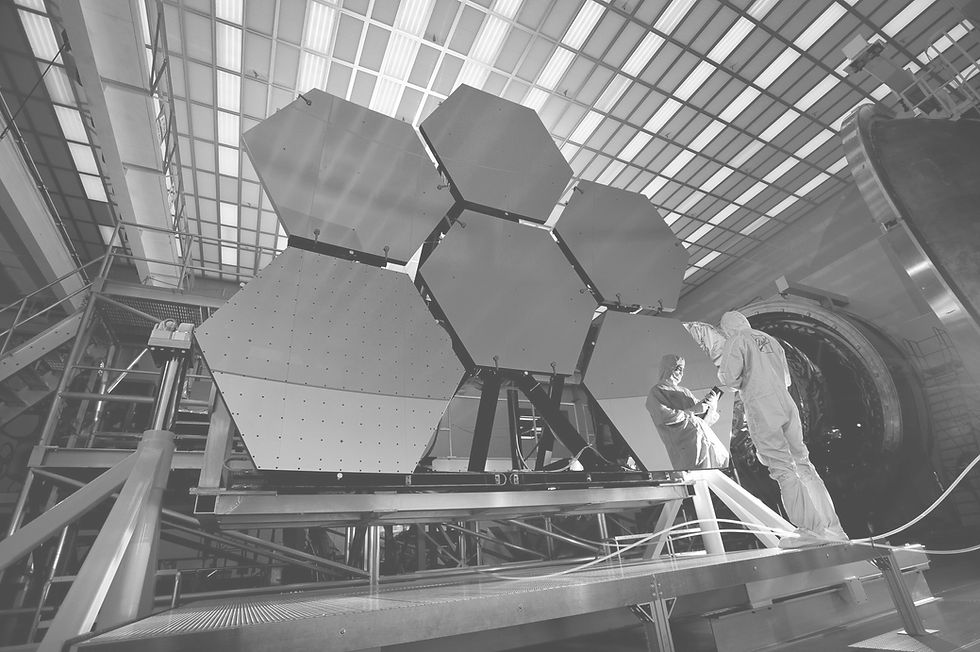
Conjunto de espejo hexagonal

Aeroespacial y Defensa

Escaneo 3D de componentes aeronáuticos y aeroespaciales para análisis de alta precisión y diseño de piezas.

Control de calidad en la fabricación de piezas complejas y sistemas de defensa.

Preguntas frecuentes

Preguntas frecuentes

What is 3D scanning and what is it used for?
3D scanning is a technology that digitally captures the geometry of real-world objects, parts, buildings, or spaces to generate precise three-dimensional models. These models can be used for reverse engineering, dimensional inspection, technical documentation, heritage conservation, product design, additive manufacturing, and the creation of digital twins. 3D scanning makes it possible to obtain detailed information about physical elements quickly and efficiently, facilitating their analysis, reproduction, or modification.

What types of objects can be 3D scanned?
A wide variety of elements can be scanned, including industrial parts, mechanical components, sculptures, historical heritage pieces, architectural elements, consumer products, prototypes, scale models, tools, and large-scale objects. The technology used depends on factors such as dimensions, geometric complexity, materials, and the level of precision required for the project.

How precise is 3D scanning?
Precision can vary depending on the technology used and the characteristics of the object being scanned. In industrial applications, it is possible to achieve very high levels of precision, enabling dimensional verification, reverse engineering, or the reproduction of complex components. Before starting any project, we assess the technical requirements to select the most suitable capture methodology and ensure reliable results.

What is the difference between 3D scanning and photogrammetry?
3D scanning uses specialized sensors to capture the geometry of an object or space, while photogrammetry reconstructs three-dimensional models from photographs taken at different angles. Both technologies are complementary, and the choice between them depends on the level of precision required, the size of the object, environmental conditions, and the project's objectives. In many cases, combining both techniques delivers particularly comprehensive results.

Do you perform reverse engineering from physical parts?
Yes. One of the most common applications of 3D scanning is reverse engineering. Starting from an existing physical part, we can generate digital models that facilitate its analysis, modification, optimization, or reproduction. This process is especially useful when original drawings, technical documentation, or CAD files are unavailable, allowing valuable information to be recovered for manufacturing, maintenance, or redesign purposes.

Can you generate CAD files from a 3D scan?
Yes. In addition to capturing geometry through 3D scanning, we can convert the resulting data into CAD models ready for engineering, design, manufacturing, or technical documentation. These models allow work to be carried out on real-world geometries and facilitate integration with product development, additive manufacturing, and industrial engineering processes.

What file formats do you deliver?
We can deliver results in a variety of formats depending on the project's needs. The most common include STL, OBJ, STEP, IGES, PLY, point clouds, and other formats compatible with CAD, BIM, industrial design, and digital manufacturing software. Our goal is to provide files that are ready to be used directly within the client's own workflows.

Is it possible to scan entire buildings, spaces, or facilities?
Yes. We use technologies such as LiDAR, photogrammetry, and other advanced capture techniques to digitize buildings, industrial facilities, architectural spaces, infrastructure, and complex environments. These projects generate detailed three-dimensional models that can be used for documentation, rehabilitation, maintenance, construction planning, or the creation of digital twins.

Which industries use 3D scanning?
3D scanning is used across numerous industries, including manufacturing, engineering, architecture, construction, cultural heritage, automotive, healthcare, energy, research, and product development. Its ability to capture precise real-world data makes it an essential tool for design, analysis, manufacturing, and technical documentation processes.

How long does a 3D digitization project take?
Turnaround time depends on factors such as the size of the object or space, the level of detail required, geometric complexity, and the final deliverables. Some projects can be completed in very short timeframes, while the digitization of large facilities or complex elements requires more extensive data capture and processing. Each project is planned individually to optimize both timelines and results.

bottom of page