top of page
3D SCANNER

3D SCANNER

High-Precision 3D Scanning for Innovative Projects

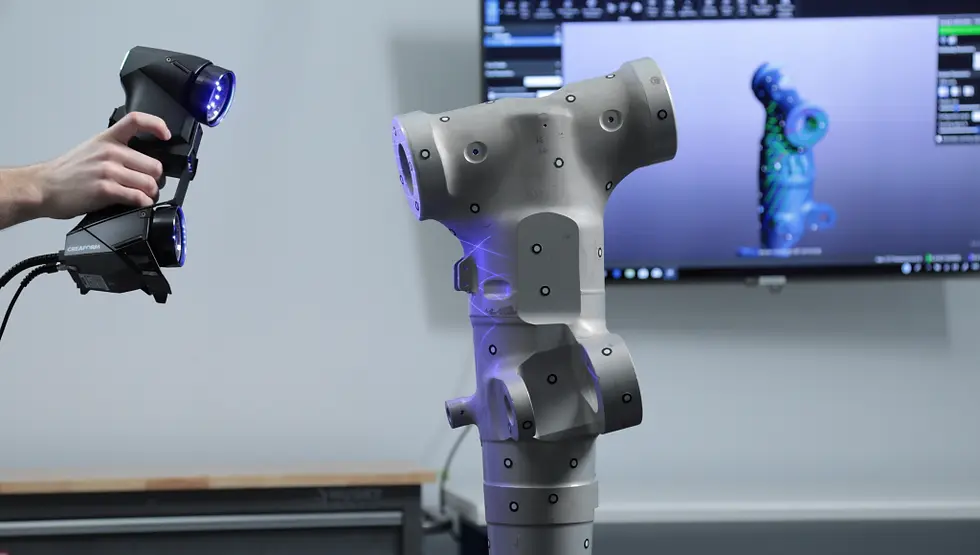
At GRUPO OMNIPRO 3D, we offer advanced 3D scanning solutions for a wide range of industrial, commercial, and creative applications. Using state-of-the-art equipment and specialized software, we help businesses and professionals digitize objects and environments with exceptional precision.

Our 3D scanning services are designed to meet the needs of different industries, providing detailed digital models that can be used at various stages of development, design, and manufacturing.

Advantages of 3D Scanning

3D scanning delivers highly precise digital models, ideal for a wide range of applications. Some of the key advantages of this technology include

3D SCAN
Explore

Millimeter-Level Precision

Obtain exact measurements of objects and structures without any physical contact.

Time Savings

Complete digitization and modeling processes quickly, eliminating the need for manual measurements.

Cost Reduction

Avoid costly errors in product design and manufacturing.

Flexibility

The 3D models generated can be used at different stages of a project's lifecycle, from initial concept through to final production.

Improved Collaboration

Facilitates communication and collaboration between design, engineering, and manufacturing teams through shared digital models.

Industrial Sectors We Serve

Our 3D scanning services are available across a wide range of industries, where 3D technology can optimize processes, improve accuracy, and reduce costs. Some of the key sectors we serve include:

Salidas de aire del coche

Automotive Industry

3D scanning for automotive parts inspection, prototype creation, and custom component design.

Optimization of manufacturing processes and quality control in vehicle production.

3D SCAN ARCHITECTURE.png

Architecture and Construction

Digitization of buildings and structural modeling for rehabilitation, renovation, and restoration projects.

Land and site scanning for urban planning, generating precise 3D models for detailed technical drawings.

Diseño de cápsulas de café

Products & Prototypes

3D scanning for product design and rapid prototype creation.

Inspection and quality control through comparison of 3D models against original designs.

Primer plano del objetivo de la cámara

Industrial Design and Custom Products

3D modeling of existing objects for recreation, modification, or customization in product design.

3D printing of custom parts, tools, and accessories.

rostros-turunuelo--ktYE-U2301205407343lx-1200x840_Hoy.webp

Art and Cultural Heritage

Digitization of artworks and historical items for digital preservation and restoration.

Creation of 3D replicas of artifacts for museums or private collections.

Zapatillas futuristas rosas

Fashion and Footwear

Scanning of garments and accessories for the creation of personalized collections.

Custom footwear design based on 3D-scanned foot models.

PROSTHETICS.png

Medicine and Healthcare

Custom prosthetics created through 3D scanning of limbs and body parts.

Surgical planning and 3D organ modeling for advanced medical procedures.

Diseño de baño moderno

Interior Design and Furniture

3D scanning of interior spaces to create precise floor plans and visualize designs in 3D.

Creation of custom furniture based on exact measurements taken through 3D scanning.
Conjunto de espejo hexagonal

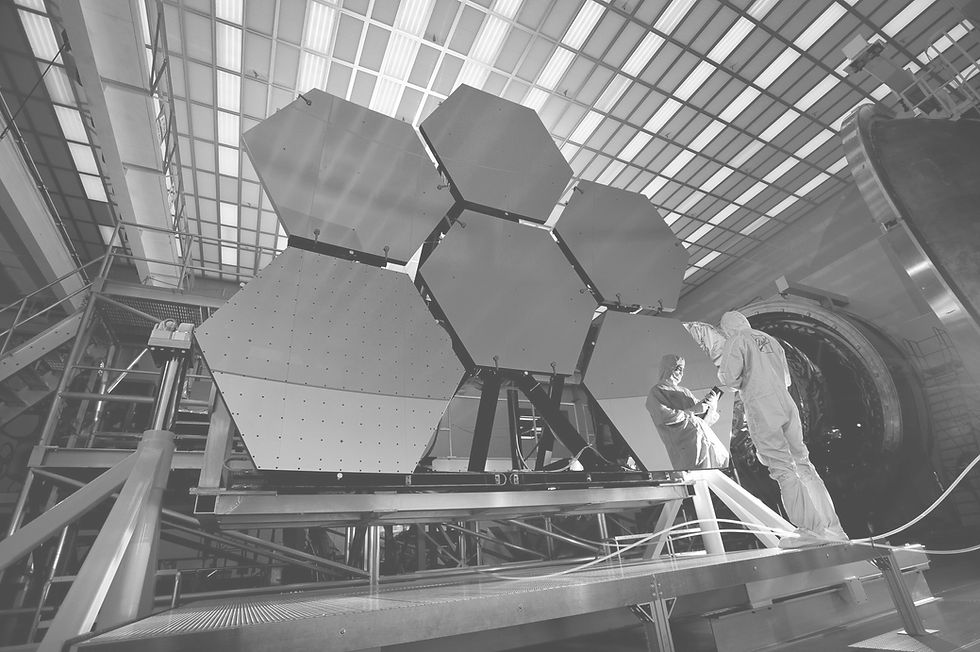
Aerospace and Defense

3D scanning of aircraft and aerospace components for high-precision analysis and part design.

Quality control in the manufacturing of complex parts and defense systems.

Frequently asked questions

FAQ 

What is 3D scanning and what is it used for?
3D scanning is a technology that digitally captures the geometry of real-world objects, parts, buildings, or spaces to generate precise three-dimensional models. These models can be used for reverse engineering, dimensional inspection, technical documentation, heritage conservation, product design, additive manufacturing, and the creation of digital twins. 3D scanning makes it possible to obtain detailed information about physical elements quickly and efficiently, facilitating their analysis, reproduction, or modification.

What types of objects can be 3D scanned?
A wide variety of elements can be scanned, including industrial parts, mechanical components, sculptures, historical heritage pieces, architectural elements, consumer products, prototypes, scale models, tools, and large-scale objects. The technology used depends on factors such as dimensions, geometric complexity, materials, and the level of precision required for the project.

How precise is 3D scanning?
Precision can vary depending on the technology used and the characteristics of the object being scanned. In industrial applications, it is possible to achieve very high levels of precision, enabling dimensional verification, reverse engineering, or the reproduction of complex components. Before starting any project, we assess the technical requirements to select the most suitable capture methodology and ensure reliable results.

What is the difference between 3D scanning and photogrammetry?
3D scanning uses specialized sensors to capture the geometry of an object or space, while photogrammetry reconstructs three-dimensional models from photographs taken at different angles. Both technologies are complementary, and the choice between them depends on the level of precision required, the size of the object, environmental conditions, and the project's objectives. In many cases, combining both techniques delivers particularly comprehensive results.

Do you perform reverse engineering from physical parts?
Yes. One of the most common applications of 3D scanning is reverse engineering. Starting from an existing physical part, we can generate digital models that facilitate its analysis, modification, optimization, or reproduction. This process is especially useful when original drawings, technical documentation, or CAD files are unavailable, allowing valuable information to be recovered for manufacturing, maintenance, or redesign purposes.

Can you generate CAD files from a 3D scan?
Yes. In addition to capturing geometry through 3D scanning, we can convert the resulting data into CAD models ready for engineering, design, manufacturing, or technical documentation. These models allow work to be carried out on real-world geometries and facilitate integration with product development, additive manufacturing, and industrial engineering processes.

What file formats do you deliver?
We can deliver results in a variety of formats depending on the project's needs. The most common include STL, OBJ, STEP, IGES, PLY, point clouds, and other formats compatible with CAD, BIM, industrial design, and digital manufacturing software. Our goal is to provide files that are ready to be used directly within the client's own workflows.

Is it possible to scan entire buildings, spaces, or facilities?
Yes. We use technologies such as LiDAR, photogrammetry, and other advanced capture techniques to digitize buildings, industrial facilities, architectural spaces, infrastructure, and complex environments. These projects generate detailed three-dimensional models that can be used for documentation, rehabilitation, maintenance, construction planning, or the creation of digital twins.

Which industries use 3D scanning?
3D scanning is used across numerous industries, including manufacturing, engineering, architecture, construction, cultural heritage, automotive, healthcare, energy, research, and product development. Its ability to capture precise real-world data makes it an essential tool for design, analysis, manufacturing, and technical documentation processes.

How long does a 3D digitization project take?
Turnaround time depends on factors such as the size of the object or space, the level of detail required, geometric complexity, and the final deliverables. Some projects can be completed in very short timeframes, while the digitization of large facilities or complex elements requires more extensive data capture and processing. Each project is planned individually to optimize both timelines and results.

bottom of page